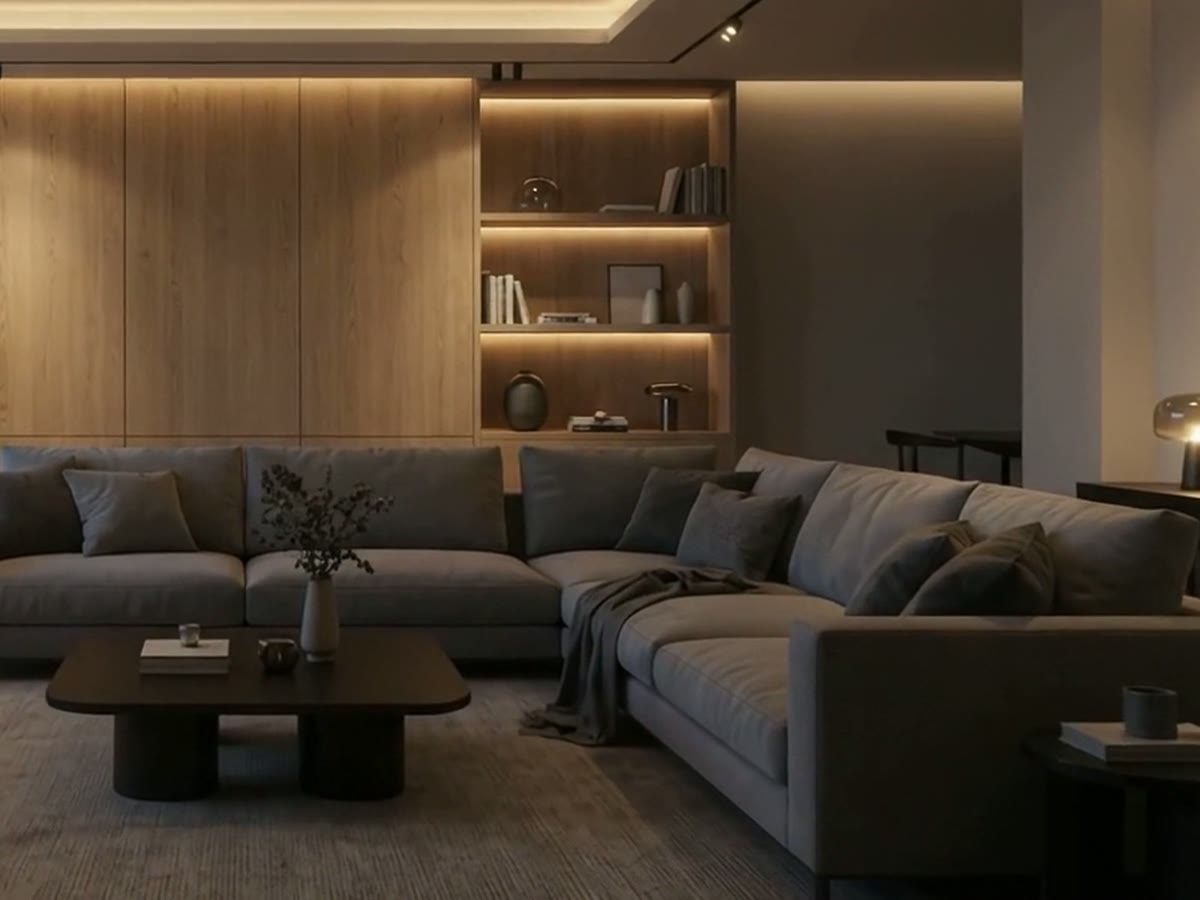
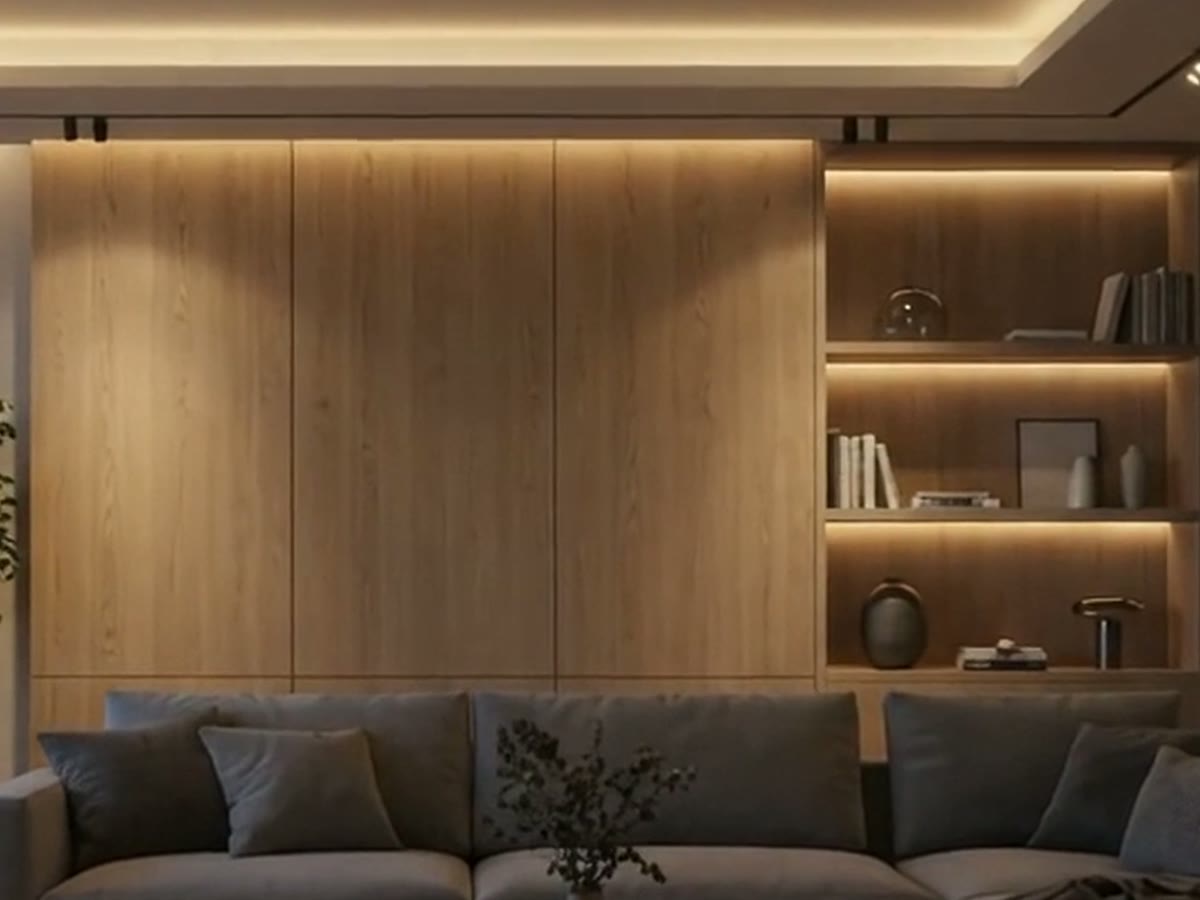
Most rooms are designed for one moment: the bright, clear middle of the day when the photographs are taken. But you live in them from the first coffee to the last lamp switched off. A well-lit room isn't the brightest one — it's the one that feels right at every hour.
When we plan a home, lighting comes first, not last. Before we choose a single sofa, we ask a simple question: how should this room feel in the morning, in the afternoon, and late in the evening? The answers shape everything else.
1. Start with the daylight you already have
Spend a day watching the room. Note where the morning sun lands, when the light turns golden, and which corners never get any at all. Those patterns tell you where to put a reading chair, which wall deserves art, and where a lamp will be needed long before sunset.
Soften strong sun rather than blocking it. Sheer linen curtains diffuse harsh light into a gentle glow, while still letting the room breathe.
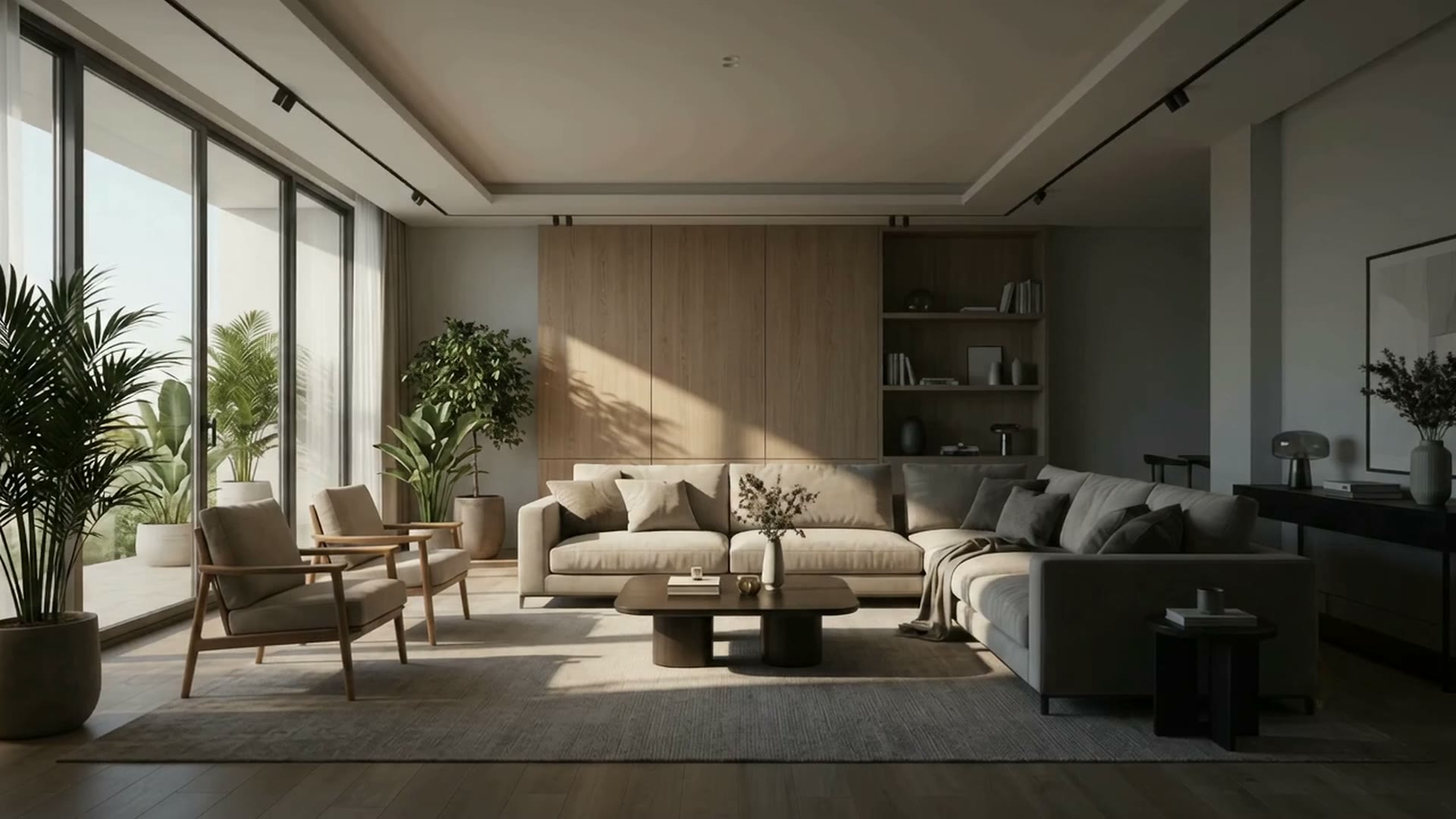 Noon
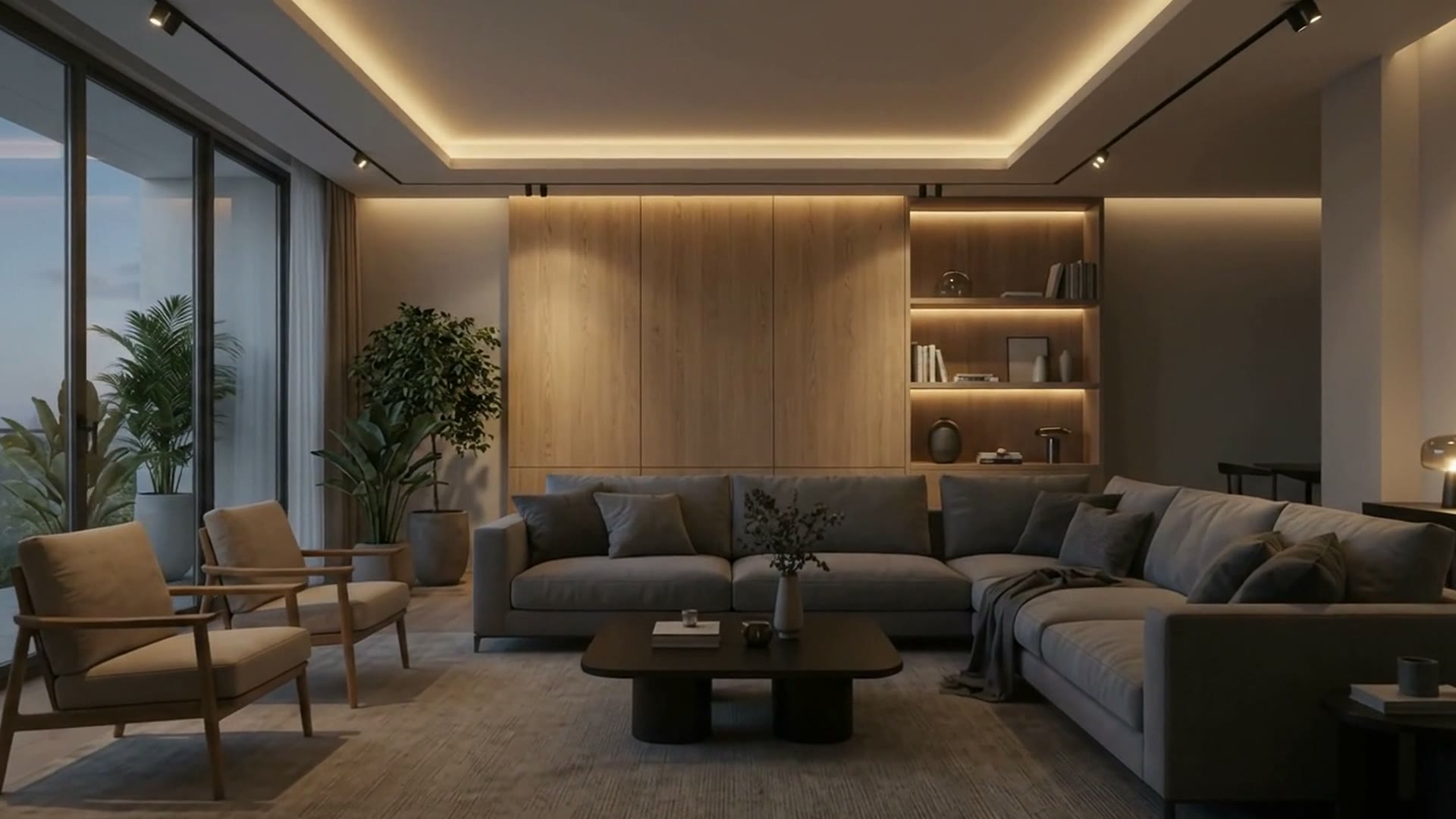 Night
2. Think in layers, not fixtures
A single ceiling light makes a room feel like a waiting room. Instead, we plan three layers that can be used on their own or together:
- Ambient light — a soft, even base, usually from cove lighting or wall washers.
- Task light — focused light where you read, cook or work: reading lamps, under-cabinet strips, a pendant over the table.
- Accent light — small pools of light that pick out shelves, art or texture and give the room depth.
Each layer gets its own switch or dimmer. That's what lets one room be bright and practical at breakfast, and calm and low at night.
Good lighting isn't about brightness. It's about where the light lands, and when.
3. Cove lighting: the quiet base layer
Cove lighting hides an LED strip in a recess near the ceiling, so you see the glow but never the source. The light bounces off the ceiling and spreads evenly, which makes a room feel taller and softer at the same time.
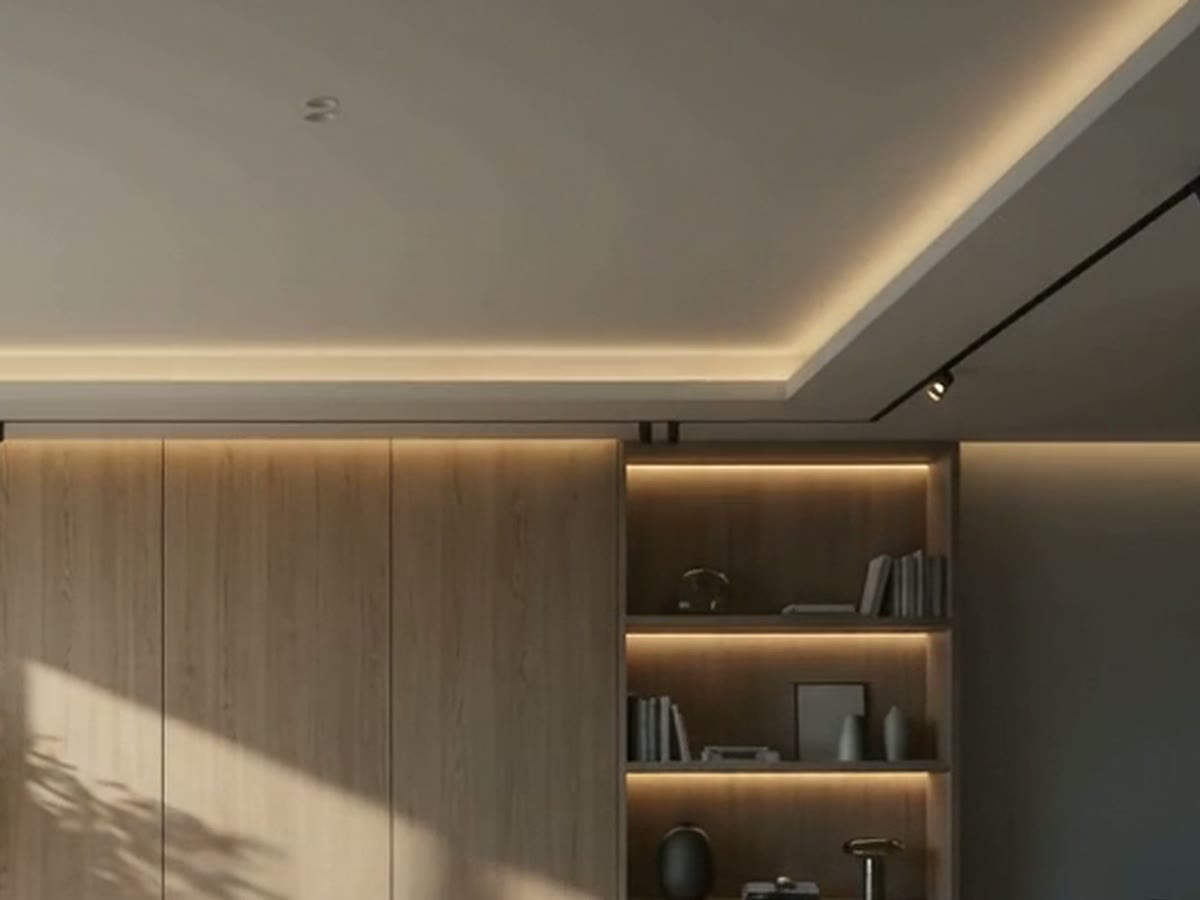
Keep the strip continuous around corners, choose a diffuser so you never see individual dots, and always put it on a dimmer. At full power it lights the room; at twenty percent it becomes a gentle evening glow.
4. Bring the light down in the evening
As the day ends, light should move lower. Table lamps, floor lamps and shelf lights at seated eye level create small pools of warmth that make a large room feel intimate. The lower the light, the cosier the room.
We often plan at least three lamps in a living room, placed in a loose triangle, so light is spread around the space instead of collecting in one corner.
5. Choose one warm colour and stick to it
Mixing cool and warm bulbs is the fastest way to make a room look patchy. For living spaces and bedrooms we use warm white (around 2700K) throughout; kitchens and bathrooms can go slightly crisper. Look for bulbs with a high colour rendering index (CRI 90 or more) so wood, linen and skin tones look natural.
Our evening lighting checklist
- Every room has at least two light sources besides the ceiling.
- Every layer has its own switch or dimmer.
- All bulbs in a room share the same colour temperature.
- No bare bulbs at eye level — every lamp has a shade or diffuser.
- There's a light within reach of every chair.
6. Plan the switches before the plaster
The best lighting plans are drawn before any walls are closed. We decide where switches go, which lights share a circuit, and which ones need dimmers — then group them into simple scenes such as Morning, Evening and Late, so changing the mood takes one touch.
Get these decisions right early, and the room will look after itself, from the first light of the day to the last lamp at night.
Planning a renovation or a new home? We'd love to help you design the light first.
Book a consultation